Nebuliser Tubing and Cup: How to Clean and When to Replace
Compressor nebuliser tubing and medication cups need regular care. Here are the cleaning steps after each use, the signs that a part needs replacing, and why your manual comes first.
With a compressor nebuliser, the medicine reaches you through the tubing and the medication cup. Both stay damp and can hold medicine residue. If they are not kept clean, hygiene suffers and the device may not produce a steady mist. This guide covers what to do after every session and how to tell when a part needs replacing.
Your manual comes first
The manufacturer's user manual is the final word on cleaning and replacement. Instructions vary between brands and even between models. One manual may tell you to wash the cup in warm water, another may name a specific disinfection method. Tubing is no different. What follows is a general framework. If it conflicts with your manual, follow the manual.
If you have lost the manual, note down the brand and model of your device and look for the manufacturer's document. You are also welcome to write to us.
Which part is which?
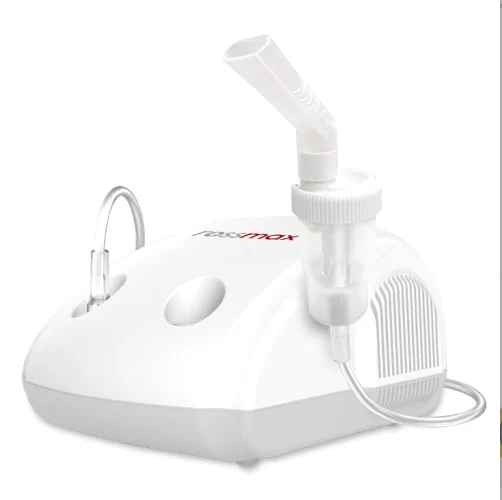
A compressor set usually has the parts below. Names differ slightly from model to model.
| Part | What it does | Care note |
|---|---|---|
| Medication cup (chamber) | Holds the medicine and turns it into mist | Take apart, clean and dry after every use |
| Tubing | Carries air from the compressor to the cup | Usually not rinsed inside with water, check your manual |
| Mask or mouthpiece | Lets you breathe in the mist | Cleaned together with the cup |
| Compressor unit | The main unit that produces the airflow | Wipe the outside with a damp cloth, never submerge |
After every use: step by step
- Switch the device off and unplug it.
- Disconnect the tubing from the cup. We cover the tubing separately below.
- Take apart the cup, mask or mouthpiece as far as the manual allows. Throw away any leftover medicine rather than leaving it in the cup.
- Wash the parts the way your manual describes. Many manuals accept warm water with a little washing-up liquid, followed by a thorough rinse.
- Leave the parts to dry fully on a clean cloth or paper towel, somewhere open to the air.
- Once they are completely dry, store them in a clean, closed box or bag.
Putting damp parts into a closed container is the most common mistake. Moisture leads to smells and build-up.
Tubing: can you wash it, and how does it dry?
The general rule: check the manual
On many compressor devices, rinsing the inside of the tubing with water is not recommended, because the water is hard to dry out. Some manuals only ask you to wipe the outside. Do whatever applies to your device.
If the inside of the tubing is damp
Mist can condense in the tubing. If your manual allows it, you can disconnect the tubing from the cup and run the compressor briefly with the tubing attached to it alone, so that air pushes the moisture out. Check first that your manual describes this method.
Do not kink it
Avoid sharp bends when storing it. A kink restricts airflow and can crack the tubing over time.
Replacement: look for signs, not dates
How long a part lasts depends on how often you use it, which medicine goes in and how it is cleaned. That is why we do not give a single time frame. If your manual lists an interval for a part, use that. If it does not, these signs suggest it is time to replace:
- The cup has a crack, a break or a lid that no longer fits properly.
- The plastic has turned cloudy or yellowed, or there is a residue that washing does not remove.
- There is a smell even after cleaning.
- The tubing is cracked, has a hole, has gone stiff or keeps a permanent kink.
- There are marks, mould-like spots or constant moisture inside the tubing that do not clear after cleaning.
- The connectors are loose or seem to leak air.
- The mist is clearly weaker than before, or sessions take longer. First check that the tubing is seated properly and the parts are clean, then replace the part if the problem continues.
- The mask or mouthpiece has gone soft, lost its shape or no longer fits the face.
After an illness, or if more than one person has used the device, you may want to replace parts in line with the manual and any advice from your doctor or pharmacist. Do not share nebuliser parts with another person.
Buying replacement parts
- Make sure the part is compatible with your device's brand and model. Tubing ends, cups and mask connectors are not the same on every device.
- A child may need a different mask size. Ask your doctor or pharmacist for advice.
- Avoid parts with opened packaging, signs of use or an unclear source.
In our shop you can browse the spare parts and masks and mouthpieces categories. The compressor nebulisers page is there if you want to see the devices themselves. If you are unsure about compatibility, ask us before ordering.
Is a mesh device different?
Mesh nebulisers have no tubing. Care centres on the cup and the vibrating mesh plate instead. If yours is a mesh device, read Mesh Nebülizatör Nasıl Temizlenir? Günlük ve Haftalık Bakım. If you are wondering how full the cup should be, Nebülizatör Haznesine Ne Kadar İlaç Konur? may help.
Quick checklist
- Find your manual and read its cleaning section.
- After each use, separate and clean the cup and the mask or mouthpiece.
- Never store parts that are not fully dry.
- Care for the tubing as the manual says, and do not kink it.
- Check regularly for cracks, cloudiness, smells and a weaker mist.
- Confirm model compatibility before buying spare parts.
Ask your doctor or pharmacist about the type, dose and frequency of your medicine, and if you are stuck on choosing parts or checking compatibility, you can reach us through our contact page.
Frequently asked questions
- Can I wash nebuliser tubing with water?
- On many compressor devices, rinsing the inside of the tubing with water is not recommended because it is hard to dry. This varies between devices, so check your user manual for the definite answer.
- Should the cup and mask be cleaned after every use?
- Yes. Most manuals ask you to take apart and clean the medication cup and the mask or mouthpiece after each session, then dry them fully. Do not leave leftover medicine in the cup.
- How often should tubing and the cup be replaced?
- We do not give a single time frame, because it depends on how often you use the device, the medicine and how you clean it. Follow the interval in your manual if it lists one. Replace a part if you see cracks, cloudiness, a smell or a weaker mist.
- There is moisture inside the tubing. What should I do?
- If your manual allows it, disconnect the tubing from the cup and run the compressor briefly with the tubing attached to it alone, so air dries it out. If moisture or marks do not clear, replace the tubing.
- Will any brand of tubing fit any device?
- No. Connectors and fittings differ between devices. Check compatibility with your brand and model before buying spare parts, and ask us if you are unsure.
This article is general information, not medical advice. Your doctor and the user manual determine how the device and medication are used.