What Does an IP Rating Mean on a Nebuliser?
Codes such as IPX4 and IPX7 show what a device was tested against. Here is what they really cover, what they do not, and how to use a nebuliser near splashes, steam and travel bags.
When you read a nebuliser's specifications, you may come across a code such as "IPX4" or "IP22". It tells you the device passed a defined laboratory test for dust and water. It does not mean you can wash the device under a running tap. This guide explains how to read the code and what to watch for at home, in the kitchen, in the bathroom and in a travel bag.
What is an IP code?
IP stands for "Ingress Protection". It comes from an international standard. The code has two digits:
- First digit: protection against solid objects and dust.
- Second digit: protection against water.
If an "X" appears instead of a digit, that category was not tested. For example, IPX4 makes no claim about dust, while the water test was carried out at level 4.
What do the water digits say?
The table below is a simplified version of the standard's general definitions. To find the code of a specific device, check its product page or user manual.
| Code | General meaning | In everyday terms |
|---|---|---|
| IPX0 | No claim of water protection | Keep it dry |
| IPX1 / IPX2 | Protected against falling drips | Light dripping, not enough for splashes |
| IPX4 | Protected against splashing from any direction | Stray splashes beside a sink |
| IPX5 / IPX6 | Protected against sprayed water jets | Rarely seen on nebulisers |
| IPX7 | Protected against temporary immersion under set conditions | An accidental drop into water |
| IPX8 | Protected against continuous immersion under conditions set by the maker | Conditions vary by manufacturer |
The first digit follows a similar logic: a higher number means better protection against smaller solid objects and dust. For a nebuliser, the second digit is usually the one that matters most.
What an IP rating does not guarantee
This is the part people most often get wrong. Keep these points in mind:
- The test is done on a new, undamaged device. Seals, covers and ports can wear over time. A knock or a drop may reduce protection.
- The liquid matters. Tests are normally run with clean water. Do not expect the same result with medication, saline or soapy water.
- Steam and condensation are a separate issue. A splash test does not cover sitting in a hot, humid bathroom for long periods.
- The medicine cup and mesh plate are treated differently. They are the open, working parts that hold the medication.
- An open charging port can lower protection. On devices with a charging cover or USB port, the rating usually applies with the cover closed.
In short, a device rated IPX4 can sit near a sink, but you should not wash it in a way that lets water get inside.
Does it differ between mesh and compressor nebulisers?
When it comes to IP ratings, the difference comes from how the device is built.
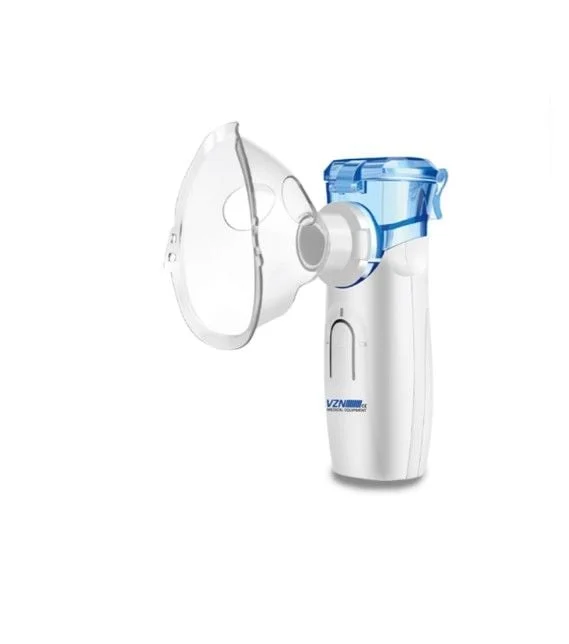
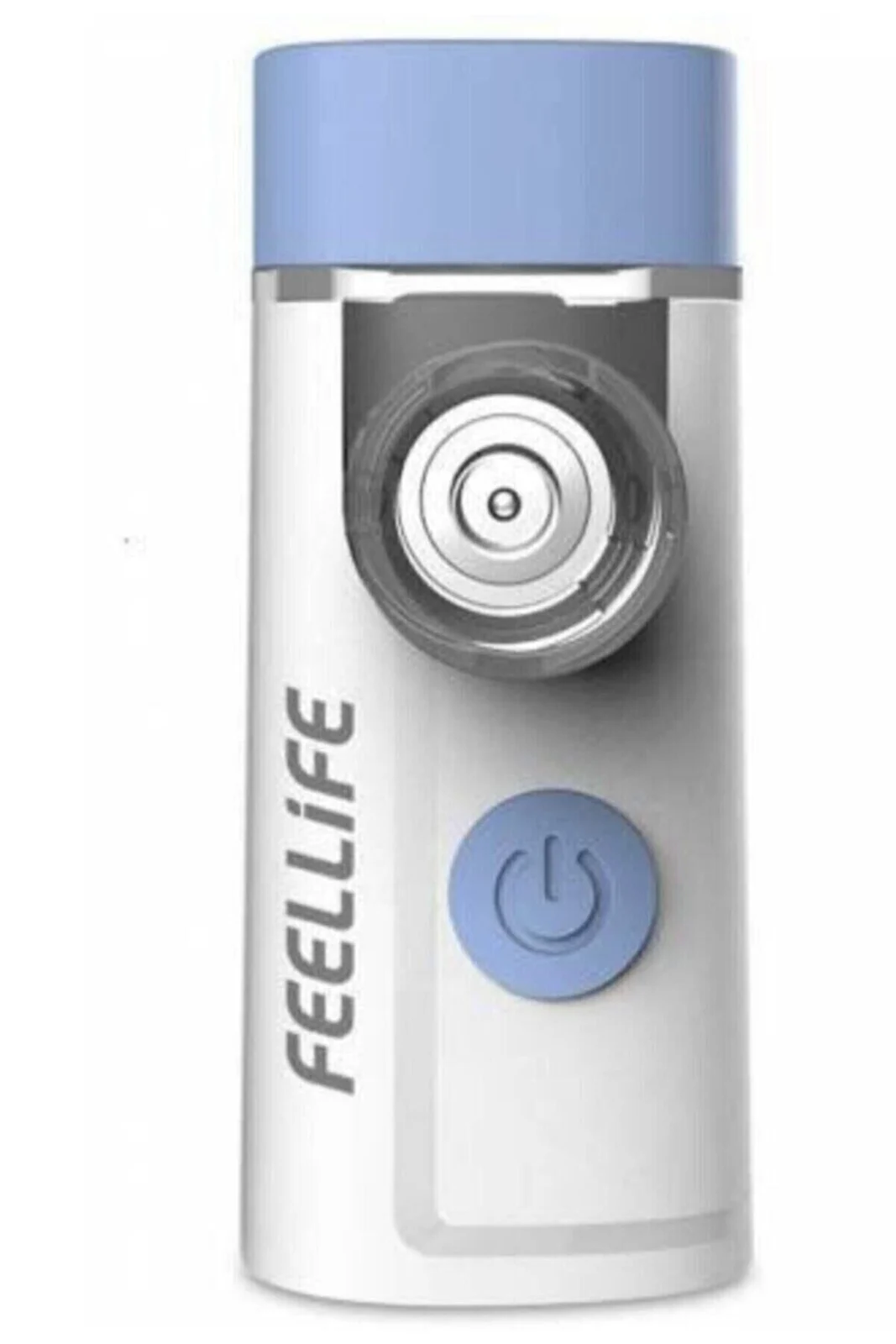
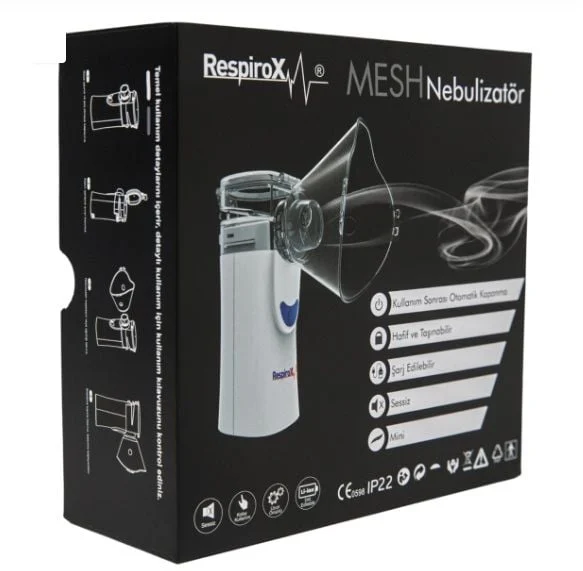
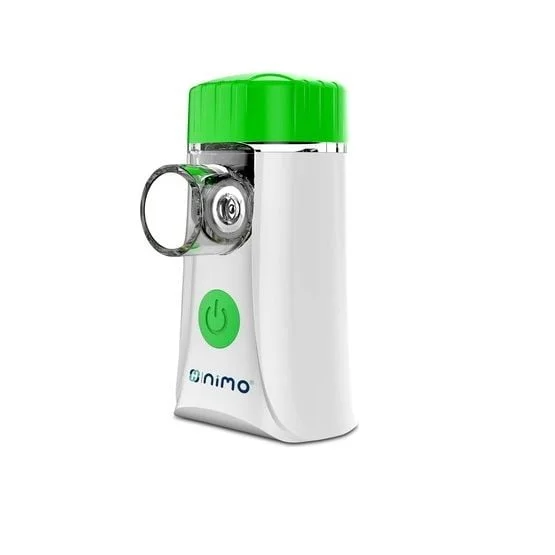
- Mesh nebuliser: Small-bodied and usually battery-powered or rechargeable. The charging port, medicine cup and mesh plate sit close together, so liquid splashes and the charging area need more attention. You can browse mesh nebulisers here.
- Compressor nebuliser: The air pump sits in a base unit and the medicine cup connects by tubing. The base is the part that must stay dry, while the cup and tubing are cleaned separately. See the compressor models.
In both types the IP value depends on the model. Do not guess the rating from the type of device.
A practical guide by location
Bathroom
- Do not place the device in the shower, bath or sink.
- Do not touch a mains-powered device, or one with the charging cable attached, with wet hands.
- Avoid leaving it in a steamy room after a hot shower. If you use it there, keep it on a dry surface away from splashes.
Kitchen
- Keep it away from the hob, the washing-up sink and the kettle.
- When opening an ampoule and filling the cup, take care not to spill liquid over the body of the device.
- If something spills, unplug or disconnect the charger and wipe it with a dry cloth straight away.
Travel and bags
- Empty and dry the medicine cup before packing. Liquid left inside can leak into your bag.
- Keep the charging cover closed.
- Pack the device in a separate pocket or pouch, away from water bottles and toiletries.
- For battery and charging details, see our battery and charging guide.
How to check the IP value before you buy
- Look at the technical specifications on the product page. If an IP value exists, it will be listed there.
- If it is not listed, read the "water", "liquid" and "cleaning" sections of the user manual.
- If the value is not stated anywhere, do not assume the device is water resistant.
- Check which parts the rating covers. Some makers state it for the main body only.
- If you are unsure, write to us and ask.
If you are buying for a child and the device will be handled often, firmly closing covers and easy-to-clean parts matter as much as splash protection.
What to do if the device gets wet
- Switch it off straight away and disconnect it from the mains or charging cable.
- Wipe the outside with a dry, lint-free cloth.
- Separate the cup, covers and removable parts as the manual describes, and let them dry.
- Do not dry the device with a hot hairdryer or on a radiator. Heat can damage parts.
- If you suspect water got inside, do not run it until it is completely dry. Stop using it if you notice odd noises, smells or it fails to work.
Our guide on how to dry a nebuliser covers the drying steps. For daily care and plate cleaning, see how to clean a mesh nebuliser.
Do not rely on the IP rating for cleaning
"Water resistant" does not mean you can rinse the whole device under a tap. Which parts can be washed and which should only be wiped differs from device to device. The manufacturer's user manual is the final word here. Do not clean the body, the mesh plate or the charging area in any way the manual does not describe.
Common mistakes
- Thinking "it has IPX4, so I can use it in the shower".
- Assuming the rating also protects the mesh plate.
- Plugging in a wet device straight away.
- Packing a damp cup into a closed bag or box.
- Assuming a device is protected when no code is listed.
One last note
Your doctor and pharmacist decide which medication to use, at what dose and how often, and if you have questions about your device's water and cleaning conditions you can write to us.
Frequently asked questions
- What does IPX4 mean?
- It means the device was tested against water splashing from any direction. It does not mean it can be rinsed under water or kept in a bathroom all the time.
- What if a nebuliser with no IP rating gets wet?
- With no protection claim, damage is more likely. Switch it off and disconnect it straight away, wipe it with a dry cloth, and do not run it until it is fully dry.
- Does the IP rating protect the mesh plate too?
- No. Do not read the code as permission to clean the mesh plate or medicine cup in a particular way. Follow the manufacturer's manual for those parts.
- Can I use a nebuliser in the bathroom?
- It is safer on a dry surface away from the shower, bath and sink, and not left for long periods in a hot, humid room. Check your manual for conditions specific to your device.
- How should I pack the device for travel?
- Empty and dry the cup, close the charging cover, and carry the device in a separate pocket or pouch away from anything containing liquid.
- Where can I find a product's IP value?
- Look at the technical specifications on the product page and in the user manual. If it is not stated anywhere, do not assume it, and ask us through the contact page at /iletisim.
This article is general information, not medical advice. Your doctor and the user manual determine how the device and medication are used.